


Every roll of Ilford film in the world is named after this town
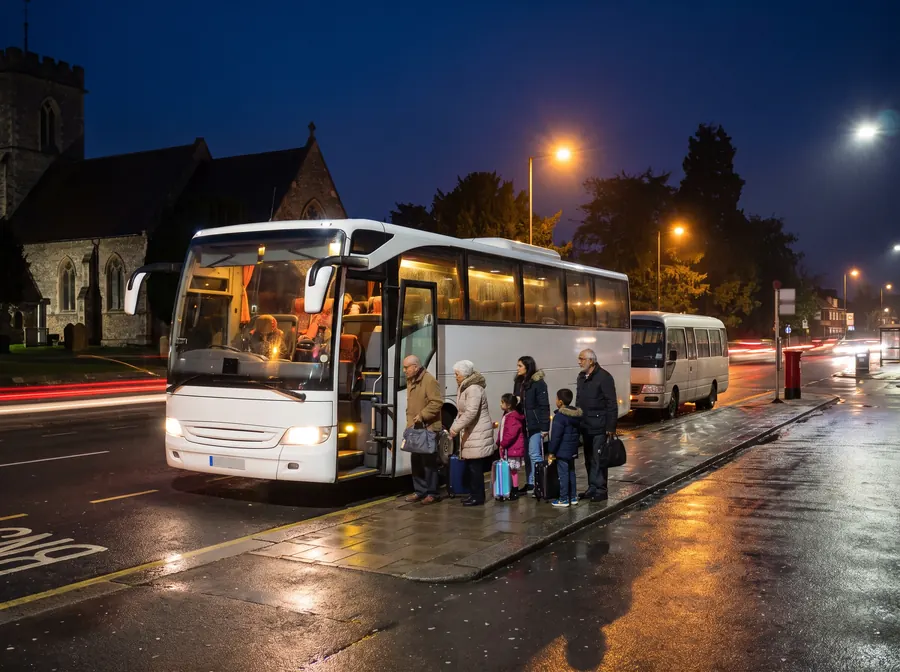
It started in the basement of a house on Cranbrook Road, a street our coaches still set down on.
Most towns on our books are named after a hill, a ford or a family. Ilford is one of the few that gave its name to something else — and the something else is on camera shop shelves from Tokyo to Toronto.
The basement
In 1879 a man called Alfred Hugh Harman began making dry gelatine photographic plates in the basement of his new home on Cranbrook Road. He called the business Britannia Works. It was a one-man operation in a residential street.
It did not stay one. He put up purpose-built premises in 1883, and the Britannia Works went public in 1891.
The name
From February 1886 the plates stopped being called Britannia and started being called Ilford — after the town they were made in. In 1902 the company gave up its own name entirely and became Ilford Limited.
So the town did not adopt a famous brand. The brand adopted the town, and then carried its name everywhere film was sold.
And then it left
The Mobberley factory in Cheshire was bought in 1928, and in 1983 the headquarters moved there for good. The company went into administration in 2004–05, and HARMAN technology was formed in 2005 by former managers, taking on the Mobberley site. Ilford film is still made. It is not made in Ilford.
Why a coach firm mentions it
Because Cranbrook Road is one of the streets we actually use. When the High Road is impossible — bus lanes, a market, the school run — Cranbrook Road and the turnings off it are where a vehicle can honestly stand. It is an ordinary road with an unremarkable frontage, and a global brand started in a cellar under it.
Tell us the address and the group size and we will tell you the nearest place a coach can honestly wait. In Ilford that is more often a street than a car park.